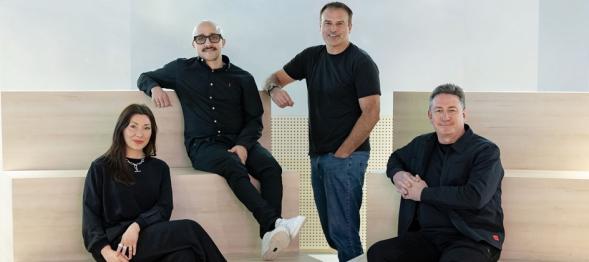

Andy Mosmans: From viral to vital
Going viral is not a goal. At best, it is a means to an end. Because in the end it is not the advertising that should go viral. It is the business.
Tomorrow, I speak about 'going viral' at FUSE Enschede, the startup event of the Twente region, where startups meet the investors and decision-makers that matter to them directly.
Everybody wants to go viral.
Viral content. Viral campaigns. Viral videos. Millions of views, likes and shares.
But why?
Going viral is not a goal. At best, it is a means to an end. Because in the end it is not the advertising that should go viral. It is the business.
And preferably for a reason.
We have always gone viral
We tend to think virality was invented by social media. It wasn't.
Christianity went viral. Islam went viral. Capitalism went viral. Democracy went viral. Money went viral. Brands went viral.
Yuval Noah Harari calls these shared beliefs Imaginary Orders: things that become real because enough people believe they are real.
Money is perhaps the ultimate example. A banknote has little intrinsic value. Yet we all believe it represents value, so it does.
Brands aren't very different.
Nike is more than shoes. Apple more than technology. Ferrari more than a car.
A large part of their value doesn't exist in factories, products or balance sheets.
It exists in our heads.
And what's in our heads determines what we ultimately do.
IO, not AI
Social media didn't invent this mechanism. It just massively accelerated it.
An idea can now travel from one mind to millions of other minds within hours.
So maybe virality is simply Imaginary Order at high speed.
People see something. Feel something. Share it. Others start talking about it. Participating in it. Believing in it. And eventually acting upon it.
That's when things get interesting.
Because the real viral loop isn't: content → views → likes → shares.
It is: idea → attention → emotion → meaning → belief → behaviour.
And behaviour creates real value.
Make the business viral
Look at SpaceX. The fascinating thing isn't that its advertising goes viral. SpaceX itself is viral. People follow the launches, Elon Musk, Mars, reusable rockets and the idea of becoming a multiplanetary species.
And when SpaceX went public, people didn't just buy a share in a company, but in an idea of the future. They believe.
Or take Ozempic.
Ozempic didn't become a worldwide phenomenon because of some brilliant viral campaign. The product itself went viral because it touched something vital: health, weight, appearance, happiness and the belief that science might suddenly solve a problem millions struggle with.
The conversation became bigger than the advertising.
The product became the media.
That is a much more interesting form of virality.
Viral needs vital
Which brings me to what I think is the essential distinction.
Something viral without something vital underneath it is usually just a temporary thingy.
Funny today. Forgotten tomorrow.
Real virality is rooted in something people fundamentally care about. Health. Wealth. Love. Status. Freedom. Identity. Belonging. Progress. The future. Life itself.
What is vital becomes meaningful. What is meaningful can become viral. And what becomes viral can become valuable.
That is what the strongest brands and businesses understand.
Nike doesn't really sell shoes. It sells the belief that there is an athlete in all of us.
Patagonia doesn't just sell jackets. It connects its business to our relationship with nature.
Tesla didn't just introduce another car. It sold an idea about what the future of mobility could look like.
People don't just buy these products.
They buy into them.
The Magnum Croissant: When Viral Meets Vital
Sometimes a viral idea is almost too good to have been invented by an advertising agency.
Take the Magnum Croissant. The recipe couldn't be simpler: take a fresh croissant, push an entire Magnum into it, remove the stick, squeeze and eat. The internet did the rest. In a matter of weeks, millions watched, copied and shared the ultimate double-indulgence hack. Magnum says content around the trend generated more than 8 million views and hundreds of thousands of interactions. (bbc.com.im)
Why? Because people don't just share information. They share things they love. And things that say something about them.
There is a wonderful contradiction here. Magnum is particularly trying to reconnect with younger consumers, especially Gen Z, while the brand historically had a predominantly female audience. At exactly the same cultural moment, Ozempic and other GLP-1 drugs have become phenomena too. Vogue even describes the paradox of indulgence in the "Ozempic era": treats have increasingly become curated, photogenic expressions of lifestyle and identity. (vogue.com)
Apparently we want to be thin and eat the croissant with the Magnum inside.
Of course we do.
Human beings have always been full of contradictions.
But there is a second reason why the Magnum Croissant is such an interesting example of going from viral to vital. It is completely true to the meaning Magnum has been building for decades: indulgence, temptation and unapologetic pleasure. From Be True to Your Pleasure to Dare to Go Double, Magnum has consistently tried to turn pleasure from something slightly sinful into something worth surrendering to. (magnumicecream.com)
And what could be more Magnum than putting a Magnum inside a croissant?
It is almost a perfect physical manifestation of the brand idea. Double the temptation. Double the indulgence. Double the pleasure.
In fact, the story is much older than Magnum.
Eve took a bite from the forbidden fruit.
We have been struggling with the tension between temptation and restraint ever since.
Which is exactly why this isn't just a funny viral food hack. It touches something vital and deeply human: sometimes we simply want to give in to pleasure.
And that is the difference.
Viral without vital is a temporary thingy.
Viral rooted in vital builds meaning.
And meaning builds brands.
From viral to vital
And that becomes even more important with AI.
We are heading towards infinite content. Infinite images. Infinite films. Infinite advertising. Infinite everything.
So content itself will become less scarce and therefore less valuable.
Meaning won't.
The important question for entrepreneurs therefore isn't: How do we go viral?
It is: What is vital about what we do?
What do we believe that others can believe in too?
Because ultimately the greatest form of virality isn't millions of people sharing your content. It is millions of people sharing your belief.
Buying your product. Talking about your company. Wanting to work for you. Investing in you. Wanting you to succeed.
So don't just make your advertising go viral.
Make your business vital.
And then make that go viral.
Andy Mosmans is the founder & CEO of VENGEAN.
 Follow Marketing Report on LinkedIn
 Subscribe to the Marketing Report Newsletter
 Send us your press releases, columns, interviews…
Join Marketing Report in our LinkedIn Groups