![[Column] Bram Holzapfel: The Ghost in the Code: Why your brand needs a human monitor](Article Images/Key Industy Images/bram-holzapfel-vengean-marketing-report-one.webp)
[Column] Bram Holzapfel: The Ghost in the Code: Why your brand needs a human monitor
For the first time in a long time, I realized that my academic past gave me an insight relevant to today’s discussions around the use of AI in the creative branding business. To be precise; a subject that fascinated me when I majored in Psycholinguistics at university.
We’ve all felt it. That slight, uncanny shiver when an LLM spits out a perfectly grammatical, structurally sound, and utterly... soulless piece of copy. It’s fast. It’s efficient. It’s well-worded. It’s a miracle of predictive algorithms. But as we race toward an AI-integrated future, we need to talk about the one thing the silicon brain – in my opinion – lacks: The Conscious Monitor. And by understanding this phenomenon, the human / AI interface, as I now like to call it, can only improve.
The Predictive Powerhouse
Let’s give credit where credit’s due. AI is the ultimate intern. It has read the entire internet. It can synthesize data, identify trends, serve up sources and draft a B2B whitepaper in the time it takes you to double-tap your morning espresso. It works on probability; predicting the next most likely word in a sequence. It is the king of "The Expected." But in branding, "The Expected" is the enemy of "The Impactful."
The Science of the "Messy-Brained" Advantage
Interestingly, our human writing process isn't just a flow of consciousness. It's a well-documented governed system. In their seminal 1981 publication, A Cognitive Process Theory of Writing, researchers Linda Flower and John R. Hayes identified the Monitor as the executive controller of the writing mind.
The Monitor is the conductor of a high-stakes orchestra. It manages the recursive loop between Planning (goal setting), Translating (turning thoughts into words), and Reviewing (evaluating the output). It is constantly switching between your Long-Term Memory – your internal library of every niche Dutch idiom or weird indie film you’ve ever seen – and the Task Environment. And it rewards or recalibrates you based on what you’re actively writing and thinking, helping you navigate toward what for you should end up being a satisfying exercise in writing.
Later, researchers like Ronald T. Kellogg (1996) expanded on this, showing how the Monitor relies on Working Memory to handle the intense cognitive load of creative problem-solving. This bio-chemical "vibe check" does what an algorithm cannot: it purposely introduces friction.
The Human Monitor doesn't just ask, "What word comes next?" It asks, for example:
- "Does this feel too safe for a disruptive startup?"
- "Is this metaphor too cliché, or can I subvert it?"
- "Will this rhythm & rhyme actually stop someone from scrolling on LinkedIn?"
While AI is busy being "correct" based on patterns, the human monitor is busy being distinctive based on intent.
The New Creative Synergy: Energizing the Machine
My goal isn't to reject AI; it’s to weaponize it. At VENGEAN, we believe in "Energising Enterprise." By now we’ve come to use AI to massively widen our knowledge base and accelerate the research phase. It provides the raw clay, masses of it, delivered at speed.
But I believe the shaping of that clay belongs firmly in the domain of the human monitor. The most powerful brands of the next decade won't be those that replaced their writers with bots. They will be the ones that used AI for the "heavy lifting" of data retrieval, allowing their creatives to focus their working memory on the Reviewing phase. Adding the wit, grit, and passionate "vengeance" that makes a brand feel alive.
The Verdict
AI is a world-class engine, but the Flower-Hayes Monitor is the driver. We provide the ethics, the empathy, and – if we’re lucky – the occasional stroke of genius that comes from a "malfunctioning" predictive path.
In a world of automated content, human-monitored creativity is your greatest competitive advantage. We can use the machine to be faster but must continue to use our wonderfully messy-brained biology to be better. Here’s to a happy harmony of scribe mnemonics.
Image: created with Gemini, monitored by the author
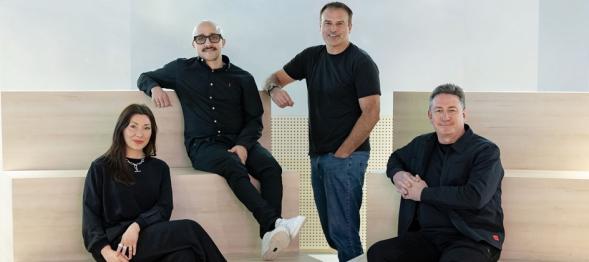
Bram Holzapfel is Executive Creative Director and co-founder of VENGEAN
 Follow Marketing Report on LinkedIn
 Subscribe to the Marketing Report Newsletter
 Send us your press releases, columns, interviews…
Join Marketing Report in our LinkedIn Groups